What Is My Car Worth?
Free instant estimate. No email, no ZIP code, no account.
How to use this car value estimator
- Type your VIN, or pick the year and the vehicle type.
- Enter the mileage, then choose the condition that accurately reflects your car.
- Check each of the three ranges. Include your car's make, model name and original price to get a closer estimate.
The VIN (vehicle identification number) is your car's own 17-character code. You may leave it out because the year and vehicle type provide enough information for an estimate.
The steps behind the estimate
We begin with the amount your car cost when new. Age, added mileage and wear all reduce a car's value. We call this loss of value over time depreciation, and subtract it in stages.
Two places supply our yearly figures. The well-known guide Kelley Blue Book (KBB) provides car prices. The car shopping website iSeeCars studied 950,000 cars at five years old. Trucks hold their price best, and so do hybrids, which pair a gas engine with an electric motor. Electric cars lose the most value.
The result is an estimate for your planning needs, not an offer to purchase your car.
Show the math
Your car's original price sets the starting value, which falls with age, mileage and wear. We begin our calculation with Kelley Blue Book's published depreciation averages. After one year, about 84% of the car's price remains. After two years, it keeps 72%; after three, 61%, and after four, 52%. After five years, it keeps 45% of its price. From year five onward, it loses roughly 10% every year. The vehicle type factor comes from iSeeCars' 2026 analysis and its look at 950,000 five-year-old cars. Truck losses were 34.2%, while hybrid losses were 35.4%. Electric cars lost 57.2%, SUVs 44.9%, and the average car 41.8%. We compare mileage against 12,000 miles a year, while the car's condition also affects the estimate. Our assumption applies 3% of value for every 10,000 miles. If we know the model, we apply its published five-year rate. Market conditions right now affect the result, tracked with the Bureau of Labor Statistics used-car price index.
Estimated value = price when new × age factor × vehicle-type factor × model factor × mileage factor × condition factor
Since a dealer must get the car ready and sell it, Trade-in comes in 15% under the private party figure. The Dealer retail figure is 18% above the private party figure. Every range runs from roughly 6% below the middle figure to roughly 6% above it. We round every figure to the nearest $100. These figures provide estimates only. They are neither offers nor a book value.
| Age | Lost that year | Value left |
|---|---|---|
| 1 year | 16% | 84% |
| 2 years | 12% | 72% |
| 3 years | 11% | 61% |
| 4 years | 9% | 52% |
| 5 years | 7% | 45% |
| Vehicle type | Lost in 5 years |
|---|---|
| Car (all-vehicle average) | 41.8% |
| SUV | 44.9% |
| Truck | 34.2% |
| Hybrid | 35.4% |
| Electric | 57.2% |
A guide to the four condition ratings
Kelley Blue Book rates cars as Excellent, Very Good, Good or Fair. Most cars earn a "Good" rating, while only about 3% reach the "Excellent" level.
- Excellent: no work of any kind is needed, and the car looks new. The car has never received paint or body repairs, its matching tires look new, its title is clean and all service work is recorded.
- Good: this rating includes KBB's Very Good and Good ratings. Small marks or scratches may be present, but the engine and other moving parts have no major problems. Its title is clean, and at least half the tires' grooves remain.
- Fair: the engine or other moving parts need work, marks and dents need repairs, and the tires may need replacing. The title is clean, and the car still runs.
- We added the Poor rating, which is lower than any of KBB's. Serious problems with the engine or body may keep the car from passing a safety inspection, the state check for safe driving. KBB gives this as a general guide: salvage or rebuilt titles take off another 20 to 40%.
A car's title is a document that identifies its owner. No insurance company has classified the car as a total loss when it has a clean title. A total loss means damage made the car not worth repairing. A salvage title shows that an insurer called the car a total loss. A rebuilt title shows that a salvaged car was repaired and then passed an inspection.
Trade-in value vs private party value vs dealer retail
A trade-in value is the amount a dealer gives you for your car. The dealer usually subtracts it from your next vehicle's price there, and this figure is the lowest of all three. Private party value is the amount another person would pay you for the car as it is now, with no repairs and no promises, when you sell it yourself. Dealer retail value is the price a dealer asks for the car. This is the highest figure because it covers repair and cleaning costs before the sale, any warranty costs and the dealer's profit. A warranty means the dealer promises to repair problems during a set period.
Our estimate calculation page covers every step and provides the full table of car models plus two examples with real numbers.
Questions people ask often
How do you calculate a car's value?
The starting point is the car's price when it was new. Each year takes value away. Kelley Blue Book's average numbers show a car keeping about 84% of its price at one year and about 45% at five. We then adjust for vehicle type, mileage and condition. A typical driver covers about 12,000 miles a year. Dealers usually offer you less than a private buyer would pay, and later sell the car for more than that.
How much value does a car lose yearly?
On average, its price falls by about 16% in the first year. Kelley Blue Book says the car is worth about 45% of its original cost after five years. The 2026 iSeeCars study found that electric cars lost the most value over five years, while trucks and hybrids lost the least.
What is the difference between trade-in value and private party value?
Trade-in value is the offer a dealer makes for your car, most often as part of buying your next car there. The amount is lower because preparing the vehicle for sale and reselling it costs the dealer money. Private party value is what someone else might pay you for the car as it is, when you sell it yourself. Dealer retail is the price a dealer puts on the car to sell it.
Do you get a value from Kelley Blue Book?
The answer is no. Well-known car price guides include Kelley Blue Book, Edmunds and Carfax. The values they provide come from private records of actual car sales. For how fast cars lose value, we work from published averages, and we show every step. Before you sell, check one of those guides and view this as a rough estimate.
Why is my email address or ZIP code not requested?
Your name and number are never passed to dealers. You can get an estimate without those details. Prices vary by location, but reliable free information about that isn't available, so we won't make a guess.
How much does a salvage title reduce a car's value?
Kelley Blue Book gives a general guide to subtracting 20% to 40% from normal value. When a car has a salvage or rebuilt title, Kelley Blue Book suggests asking an expert to assess the car's value separately.
Where can I find my VIN?
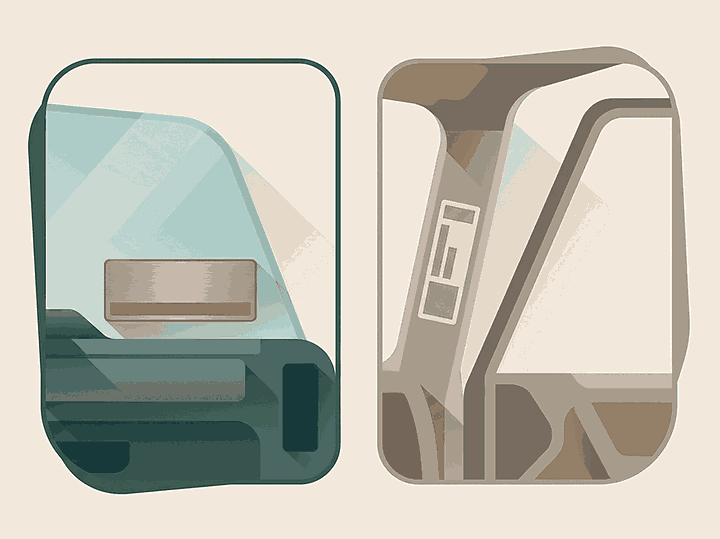
The 17-character VIN can be found where the dashboard meets the windshield on the driver's side. A sticker inside the driver's door frame shows it, and so do the registration card your state issued for the car and your insurance card. The letters I, O or Q never appear in it.